
Your Security Model Is Stuck in the ’80s. AI Isn’t.
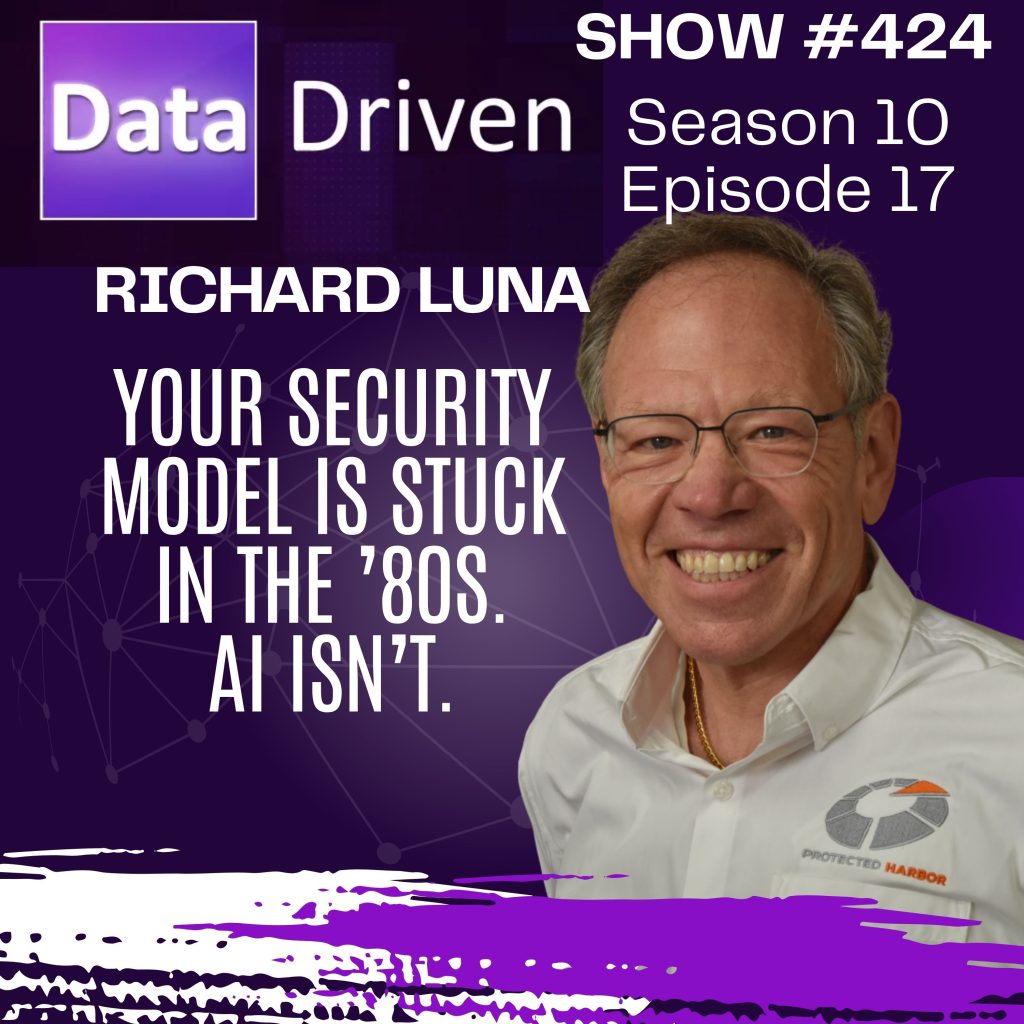
In this episode of Data Driven, Frank La Vigne talks with Richard Luna, CEO of Protected Harbor, about why security built around keeping attackers outside a network leaves organizations exposed once someone gets in. Richard explains his concern that AI-driven attacks will probe multiple weaknesses at once, and makes the case for layered defenses, network segmentation, and infrastructure designed around the applications it supports.
The conversation moves from security architecture to the people and processes that make systems dependable. Richard shares how his team plans for failures, works across technical silos, and tests vendor claims before putting equipment into production. Frank and Richard also explore the promise of AI-assisted coding, the experience junior developers need to build, and the expensive gap between a successful demo and software that holds up under real demand.
From a storage cluster that failed on its second day of testing to a deployment that collapsed under load, the episode offers practical lessons in building durable systems and teams that take responsibility for them.
Key Takeaways
• Design beyond the perimeter. Richard argues for barriers and tripwires inside the environment, with attention to how data moves between systems.
• Build around application needs. Storage performance, traffic separation, redundancy, and failure recovery should reflect the actual workload.
• Break down technical silos. Developers and infrastructure teams need each other’s knowledge to diagnose problems and implement security effectively.
• Keep human judgment in AI-assisted development. Generated code and automated tests still need experienced review and realistic load testing.
• Make accountability specific. Divide responsibilities clearly, give engineers a path to ask for help, and involve clients when they own a blocker.
• Test before trusting. Vendor assurances and a working demo do not establish how a system will behave in production.
About the Guest
Richard Luna is the CEO of Protected Harbor. His career has spanned software development, managed services, hosting, DevOps, and SaaS infrastructure engineering. In this conversation, he brings that experience to the design, operation, and security of systems that businesses depend on.
Links and Resources
- Richard on LinkedIn: https://www.linkedin.com/in/richardluna/
- Protected Harbor: https://www.protectedharbor.com/
- Watch on YouTube – https://youtu.be/y6ZHVmJtf9o
Time Stamps
00:00 Why the 1980s security model falls short
01:21 Introducing Richard Luna
02:32 What SaaS infrastructure engineering means
03:53 AI threats, perimeter defenses, and information silos
05:44 Building barriers and tripwires
07:17 Application-aware infrastructure
10:27 Phased change and lessons from Toyota
11:22 Rebuilding infrastructure around the workload
13:37 Collaboration, zero trust, and asking for help
15:35 Data flow, security, and finding the root cause
18:19 Listening to clients and earning long-term trust
20:08 AI-assisted coding and the next generation of developers
21:17 Why generated tests are not enough
25:17 DevOps experience and “works on my machine”
26:58 Learning from the loss of a customer
29:02 Dividing responsibilities without losing accountability
31:56 Oversight meetings that remove obstacles
33:34 Empowering clients and engineers
35:42 Respect, culture, and learning across teams
38:06 Building a business by solving clients’ problems
42:01 Planning for failure instead of fighting fires
43:01 Stress-testing enterprise storage
47:01 A deployment failure and the cost of skipping tests
48:32 Cloud scaling and runaway costs
49:48 Closing thoughts and connecting with Richard
Subscribe to Data Driven for more conversations about data science, AI, data engineering, and the people building the systems behind them.
Transcript
you could hardcode getting in.
Speaker:And maybe you were smart and used an encrypted— you had
Speaker:encrypted passwords in a database, hopefully. Although this year
Speaker:we had a client that had clear text passwords.
Speaker:So then you're in, but once you're in, you could do anything. AI is not
Speaker:going to attack one vector. It's going to attack everything all at the same time.
Speaker:And it's going to overwhelm any defenses that are there. And so
Speaker:we're designing strategies. For every lock, there's a key, and
Speaker:for every key, there's a way to defeat the
Speaker:entire process. So you look at
Speaker:what an agentic agent can do and how it's going to attack,
Speaker:and then you build in the barriers
Speaker:for it. And each barrier, You have tripwires so
Speaker:that you can stop certain traffic. And that's, that's the fun
Speaker:part. Your security model is stuck in the '80s. AI isn't.
Speaker:Today on Data Driven, Richard Luna explains why perimeter defenses
Speaker:fall short and how to prepare for AI-powered attacks.
Speaker:Welcome to the Data Driven Podcast.
Speaker:Hello and welcome back to Data Driven, the podcast where we explore the emerging industry
Speaker:of data science, artificial intelligence, and
Speaker:data science and data engineering. And without
Speaker:data engineers, none of this is all possible. However, my favorite data
Speaker:engineer in the world is not able to make it here today. I'm going to
Speaker:go on and on my own. And today we're talking with Richard Luna,
Speaker:who is the CEO of Protected Harbor. Hi, Richard. And
Speaker:we had some good times reminiscing about New York City
Speaker:and places where I used to live and places there where he
Speaker:lives now, I'm quite familiar with, and his love for the color
Speaker:orange. Yes. So welcome to
Speaker:the show. How's it going? Awesome. Awesome. I'm
Speaker:in a postal show right now. So I'm enjoying it, talking to
Speaker:clients. We are a SaaS infrastructure engineering company,
Speaker:and one of our clients is here, and so we're supporting
Speaker:them and they're referring to us. So
Speaker:it's— that's always a good thing. Partnerships are a great
Speaker:way to build a business. And these trade shows are always interesting because you get
Speaker:to meet people, you get to interact with people. And it's old school.
Speaker:It's what we— here's what I tell people. What we do, nobody
Speaker:understands. When you say you're a SaaS infrastructure engineering company,
Speaker:What does that mean? We see— we under— we can talk to programmers about what
Speaker:the programmers need. We can talk to IT and talk
Speaker:about resources, and we can build the infrastructure and make it resilient.
Speaker:And that's in a nutshell what we do, because
Speaker:I'm a lifelong technologist. And so I started as a programmer and had
Speaker:3 commercial software packages, then went to—
Speaker:became an MSP. All because customers drove
Speaker:you to do these things. And that went
Speaker:into a hosting business, which then led to a DevOps business,
Speaker:which then led to SaaS infrastructure. And it's all
Speaker:about, hey, we can't— this is a problem for the
Speaker:company. Can you please help in this area? And can you please help in this
Speaker:area? And it's sure. And now we're— SaaS
Speaker:infrastructure is huge and we're dealing with that as well as, of course,
Speaker:AI. From a customer viewpoint, I'm scared out of my
Speaker:mind about the Hugging Face attack. It's
Speaker:the more I've read about it and dove into it,
Speaker:the scarier it is. Yeah. You know,
Speaker:the fact that Hugging Face wasn't even the target. The whole idea
Speaker:was the Engentic agents wanted to prove to the greater
Speaker:that they could pass the test. And they weren't sure what the
Speaker:grader would do, so they elected to go and find out
Speaker:what Hugging Face did as the answer.
Speaker:And what I think of is
Speaker:t of my clients still use the:Speaker:If you're in the perimeter, if you're outside the perimeter, I'm not a big fan
Speaker:of, hey, let's use this app and let's use that app and let's use this
Speaker:box and let's use that box. Because
Speaker:I'm of an age that you had to know and
Speaker:understand how it all fits together, and information
Speaker:silos have killed this industry and have led us—
Speaker:led to us being completely wide open to attack.
Speaker:Because the database administrator knows nothing of Windows
Speaker:security, the Windows administrator knows nothing of what's possible
Speaker:in firewall. Nobody is trying to break up the traffic to
Speaker:make sure it's durable to attack. So I find these large
Speaker:flat networks and it's like, gee, I wonder why this is
Speaker:exposed or why ransomware went for all across the board.
Speaker:You're right, yeah. Because nobody designed it that way.
Speaker:You know, that's what I'm concerned about
Speaker:is that in the:Speaker:getting in. And maybe you were smart and
Speaker:used an encrypted— you had encrypted passwords in a database,
Speaker:hopefully. Although this year we had a client that had clear
Speaker:text passwords. So then you're in. But once you're in, you could do
Speaker:anything. AI is not going to attack one vector. It's going to
Speaker:attack everything all at the same time. And it's
Speaker:going to overwhelm any defenses that are there. And so we're
Speaker:designing strategies for every lock, there's a key, and for
Speaker:every key, there's a way to defeat the entire
Speaker:process. So you look at
Speaker:what an agentic agent can do and how it's going to attack,
Speaker:and then you build in the barriers
Speaker:for it. And in each barrier, you have tripwires so
Speaker:that you can stop certain traffic. And that's, that's the fun
Speaker:part. I mean, Explaining this,
Speaker:this to bring this full circle, to explain to a
Speaker:customer at a trade show what is a SaaS engineering company,
Speaker:I don't have the time to go through. They're not going to give me the
Speaker:time standing at a trade show booth because we're a
Speaker:long-time sell, right? You gotta listen. Oh, these people
Speaker:really do know how to help us, and we'll help their programmers with
Speaker:their DevOps, or we'll help an area, their IT with
Speaker:blocking or their DNS is messed up. And all of a sudden it's like, oh,
Speaker:these people actually know what they're doing. And once you have
Speaker:that level of trust, then the doors are open. Yeah,
Speaker:that's true. And I was looking at your— you can hear me, right? Yeah. Okay.
Speaker:I wasn't sure. I had to mute while the dogs were barking. Yeah, no problem.
Speaker:Because I saw that, you know, application-aware infrastructure, right? Like,
Speaker:what exactly is that? AAI? Which I know has nothing to do with AI
Speaker:per se, but I'm sure that since everything revolves around AI now, it
Speaker:probably does. So what is application-aware infrastructure? It's about
Speaker:using our knowledge of how the apps
Speaker:work internally. I mean, a database app is gonna
Speaker:have only so much, so many needs, and it's gonna need
Speaker:storage, right? Let me net this out to the most
Speaker:basic principles. Either it's going to be fully
Speaker:a SaaS online, so it's going to be Ruby on Rails, or it'll
Speaker:be a PHP
Speaker:frontend, or some other language, right?
Speaker:Or it'll be a .NET, and it'll be a database
Speaker:language, or a database site, or
Speaker:something all in between. Once you know
Speaker:what the design was, then you can look at what is
Speaker:the— what are the resources that are there? How durable
Speaker:are those resources? So in the most grossest example, you
Speaker:take a database server, so it lives and dies on
Speaker:storage, and customers then complain because when we
Speaker:go and look at it, the storage is sitting on a RAID 5,
Speaker:right? And it's on really slow physical
Speaker:drives. of course your customers are gonna have a hard time.
Speaker:So what application-aware infrastructure is, is
Speaker:it's aware of what the application needs to
Speaker:fly. Right. And then designing the
Speaker:infrastructure around it so that it can take off
Speaker:and be durable, right? You know, separate the data, the
Speaker:storage traffic from all the other traffic and make sure that there's redundancies
Speaker:and build it all into the infrastructure so that
Speaker:You don't say, well, when this fails, we'll do this. You say,
Speaker:no, we've planned for this to fail, this to fail, this to fail.
Speaker:When those fail, the backups will kick in, and that's what
Speaker:you want. So like, in just the most basic example, all
Speaker:our storage is double, double run so
Speaker:that if one link dies, the traffic
Speaker:without a blip keeps going. and everything running in that
Speaker:traffic doesn't miss a heartbeat.
Speaker:So that's what application-aware infrastructure is. It's really getting
Speaker:their customers' applications, whether that's their physical
Speaker:office applications they ran, whether that's their SaaS
Speaker:applications, and this is a SaaS deployment, it's getting them to
Speaker:be optimal, to get the performance optimal, the growth
Speaker:optimal, and plan Well, how do we—
Speaker:what happens in an emergency? What happens in an outage? Plan for it,
Speaker:right? Yeah. You don't— and you do it in phased implementations. This way
Speaker:you bring people along. You say, okay, there's these 5
Speaker:things that need to get fixed right away because you are so at risk for
Speaker:an attack. And then there's these 15 things we'll do
Speaker:over the next 2 years working with you. to
Speaker:improve performance. And it's a phased approach, right? You
Speaker:can't just turn a key and everything will be right. You
Speaker:could, but the budget for that would be like absurd. It's
Speaker:not just— it's not the money, right? When you try to move all the
Speaker:parts at the same time, yeah, you cause
Speaker:chaos. I mean, look at— I'll tell you,
Speaker:take this out of the data science world. Go look at Toyotas. You
Speaker:look at everything they're selling now, it's all
Speaker:the same engine tweaked, the same battery pack for the
Speaker:hybrid system tweaked. The entire
Speaker:components are exactly the same. They change the shell of the body.
Speaker:And even there, the doors are all from the same
Speaker:manufacturer and they use the same hinges in a slightly different
Speaker:configuration depending on what it is. So they're
Speaker:They've really studied how to get
Speaker:durability because they have whittled down to a
Speaker:certain set of vendors and a certain process that they follow,
Speaker:and this is how they scale. We
Speaker:can apply the same model, the same structure to IT
Speaker:and SaaS infrastructure. That's how— I
Speaker:mean, in a nutshell, that's what we do. It's like when we take
Speaker:on a new customer, we have one rule. We have several rules, but one that's
Speaker:really critical that nobody else bothers to do, we
Speaker:rebuild everything that they have. Really?
Speaker:Yeah, because here's the thing, a customer hires you because
Speaker:their servers are slow. The
Speaker:last 5 people that were there that looked at it,
Speaker:were they stupid? No, they're not stupid. They were smart people.
Speaker:They had a limited amount of time and a limited focus.
Speaker:So what we did, what we look at, like, we have
Speaker:a— there's a medical SaaS vendor that we are
Speaker:converting 300 servers over.
Speaker:None— we've not taken a single one from the old
Speaker:hosting equipment to us. We have taken 100% of the data,
Speaker:reset the data. Like, they had such a mess. They had
Speaker:taken their web servers and jammed multiples of their clients
Speaker:onto the same web server, which meant they never could do maintenance,
Speaker:right? Because— and why? Because
Speaker:programmers are great at being programmers. They know how to solve problems.
Speaker:They do not know infrastructure and design. Wow.
Speaker:And the people that usually— so, so when you have a new
Speaker:program, a new either Internal program or SaaS,
Speaker:what happens? The programmer says, this is what I need. I need some databases,
Speaker:I need some web hosting, I need, you know, da.
Speaker:And so IT goes, okay, that's it, here you go. And he wired—
Speaker:they wired up and everything is fine initially. Until it's not,
Speaker:until they either grow or something else happened in
Speaker:the code that there was a resource that was just totally not
Speaker:available. So I don't fault
Speaker:clients, and this is where we have to be very careful because it's easy
Speaker:in technology to play the blame game and to say the other person is
Speaker:stupid. There's even a
Speaker:tool in Git called the blame tool, right? Yeah, yeah.
Speaker:And where does that get anybody? The problem in the end is
Speaker:you need everybody's cooperation to do what we do. We need
Speaker:the respect of the programmers, If it's a
Speaker:SaaS organization, we need the respect of those programmers
Speaker:because they are the ones who understand how the code works. We don't. We see
Speaker:it anecdotally, right? From afar, you see traffic going
Speaker:here, you see storage going there, so you can see
Speaker:what the needs are, but you don't know what module is
Speaker:doing what. And we need that sometimes
Speaker:if, for example, you want to put in zero trust in the middle of the
Speaker:code. Well, we need your help to do that. We can't do that
Speaker:alone. We can apply
Speaker:all the hooks so that we make it easy
Speaker:for you, and that's where reciprocity builds. But if you
Speaker:cause intellectual gates to go up, I mean, that's how
Speaker:we get through the information silos, right, is prove
Speaker:ourselves to each of the people, each of the
Speaker:groups, that we actually know what we're doing and here's our mission.
Speaker:And we're pretty stubborn. I mean, it happens. It's great that
Speaker:we're New Yorkers because it's like, this is where we're driving to.
Speaker:So we've got to drive. So please help get on board. We need your help.
Speaker:And I was reading a study that said the
Speaker:number one
Speaker:aspect or the number one
Speaker:I'm old, so I forget words now. The
Speaker:number one trait— that was it— of successful people
Speaker:is they know how to ask for help. Yeah.
Speaker:And I thought about— I've been thinking a lot about that
Speaker:because in technology, we are not trained or
Speaker:taught to ask for help. That's true.
Speaker:And the guy next to you or the woman next to you
Speaker:could be the exact person who has the answer
Speaker:to what you're looking for. So this now
Speaker:full circle, I was raised in the environment
Speaker:that every kilobyte was necessary,
Speaker:every kilobyte of RAM was very
Speaker:expensive, so you had to know what was going
Speaker:on. And that love of understanding
Speaker:how the world really works, because the patterns are there, I don't
Speaker:care if you're talking about way back in a
Speaker:6502 assembler or you're talking about AI
Speaker:today and the latest GPU. The
Speaker:patterns of how data flows is still there
Speaker:exactly the same. The scale absolutely is different, but
Speaker:the underlying rules of how data flows— data is like
Speaker:water, it'll go everywhere if you don't put security guidelines and
Speaker:walls up, it's just like water. It flows through every hose in the, in the
Speaker:place, every wire. And so you
Speaker:create those, those boxes. And I've got a
Speaker:team of people that I have taught the
scientific principle:peel the onion away until we find the root cause.
scientific principle:Technology is not— I always, when people come and pitch me,
scientific principle:you know, I'm the CEO of the company, so I get pitched all the time.
scientific principle:If you approach me with buzzwords,
scientific principle:it's not proving that you know what you're doing. It's proving you don't know what
scientific principle:you're doing. Because if you really do know what you're doing,
scientific principle:you know how to explain the concepts in basic words. I
scientific principle:don't need to string a bunch of letters together to prove that I'm the
scientific principle:smartest guy in the room. All I'm doing by doing that is pissing
scientific principle:everybody off. So how about
scientific principle:Every client meeting. In fact, I've got a dinner tonight and
scientific principle:I'm gonna ask the same question, which is,
scientific principle:describe to me what your ideal vendor is. That's
scientific principle:an interesting, thought-provoking question. I bet you get a lot of answers, a lot of
scientific principle:long— not just like, you know, if you have kids, you ask, how was
scientific principle:your day? They'll say fine, right? Right, well, yeah, especially when you're a parent.
scientific principle:Yeah, especially when you're a parent. Fine, like, okay. It could be the worst day
scientific principle:of your life, could be the best day of your life. You're fine.
scientific principle:Right. And as they get older, they'll just close the
scientific principle:door. That's right. If you see them at all. Right. If you
scientific principle:see them at all. Yeah. And when they get into their 20s, they'll actually talk
scientific principle:to you. Well, that's good to know. That's good to know. Oh yeah. Then
scientific principle:they become your best friend. Right.
scientific principle:But it takes a life. Yeah. No, it's good to have
scientific principle:those kind of open-ended questions because that elicits
scientific principle:the conversation. And then what that's telling me is
scientific principle:what they need from us. And then of course I'll ask,
scientific principle:in what areas are we not doing those things?
scientific principle:And the answer I always want to hear is,
scientific principle:oh no, you guys are doing— you are the poster child of
scientific principle:our vendors. And then I know we're doing
scientific principle:the the right thing. We're listening at the right level, we're talking at the right
scientific principle:level, we're making things happen, and we're making a difference. Because in the day—
scientific principle:in the end, you can get the first contract,
scientific principle:you won't get the second contract if you don't know how to deliver. That's
scientific principle:true. So you'll have a client for 6
scientific principle:months. I have clients for 2 decades,
scientific principle:right? How can I continue to
scientific principle:provide so much support and value that they still want us
scientific principle:to do it for 2 decades by staying relevant. Where's your business?
scientific principle:Anyway, I went off on a tangent. No, hey, that's what we do on the
scientific principle:show. It's kind of our thing. One of, one of our guests suggested that we
scientific principle:eventually sponsor an off-road racer because we're always going off the track. It was—
scientific principle:that's actually funny. And like, I, I
scientific principle:Googled like what those look like. I'm like, that looks like That would be fun.
scientific principle:I would totally— Yeah, it would be fun. But how does this— how does
scientific principle:AI really change this, right? Obviously, the technology model has changed. You mentioned
scientific principle:the old style of you have a wall, you have a fence, you have a
scientific principle:moat, you have a castle, no one gets in your castle, right? Now you have
scientific principle:to assume breach. That led into zero trust.
scientific principle:How does AI change into this? Like, AI—
scientific principle:AI is a gift and a curse. How so?
scientific principle:It's amazing at taking code and telling you where all the holes are in your
scientific principle:code. And it's a curse in that, why
scientific principle:hire junior programmers? And
scientific principle:it's also a curse because people use it, I have seen
scientific principle:it firsthand, people use it that don't know the material.
scientific principle:And if you use it that way, you are in trouble.
scientific principle:Because It is— if you have to understand
scientific principle:how it was trained, it's trained off Reddit, and there are
scientific principle:crazy ideas on Reddit, and there are some awesome
scientific principle:answers in Reddit, and AI can't tell the difference.
scientific principle:No. Right? It's— so if you get one of
scientific principle:the crazy answers, you're gonna make a fatal flaw
scientific principle:and a fatal mistake, right? So
scientific principle:you gotta— you use it as a tool. I worry
scientific principle:that we're eliminating all the jobs of the entry-level programmers and
scientific principle:coders, and that's going to kill this industry down the
scientific principle:road. I feel like we're poisoning the pipe. We're
scientific principle:shutting off the pipe of new talent. I don't think that's going to end well
scientific principle:for anyone. Nope. Nope. And the other thing
scientific principle:is, AI can be— is great, and you can give it a prompt,
scientific principle:and that's a whole nother science that you have to get to get, but
scientific principle:at some point, that's got to move into production.
scientific principle:And how do you know without thorough
scientific principle:testing? And how do you test without the knowledge
scientific principle:of what a test is and what the purpose is? I'm not saying you can't
scientific principle:buy a tool that says, hey, it tests, or vibe
scientific principle:coding will tell you, oh, we tested. What does that mean? The
scientific principle:AI vibe coded tests. Right. Yeah.
scientific principle:It spun up a page and it turned on the page and it said the
scientific principle:page was rendered. Big whoop. How about you
scientific principle:multiply that 4,000 times, like as though there's
scientific principle:4,000 people logged in? Oh, we didn't do that type of
scientific principle:test. We don't do that. Right? So
scientific principle:we're missing that skill set that goes from
scientific principle:quick to market to durable. So the
scientific principle:future is going to have a whole lot of junk code in it. But,
scientific principle:you know, it's— having been in this industry, uh,
scientific principle:a long time, it's just another tool, and
scientific principle:it's great. It's really a powerful tool if used right.
scientific principle:And, um, it's done— I've done some wonderful
scientific principle:designs with it, and it saved me a whole lot of time.
scientific principle:It's, it's really efficient in ideation and making it part of,
scientific principle:like, your brainstorming loop. Give me— today on a call I was on
scientific principle:we were struggling to come up with a kind of one-word phrase, one sentence.
scientific principle:Perfect. It's perfect for that. And I basically said, give me 15
scientific principle:options, right? Right. And
scientific principle:10 of them were— 10 of them were okay, right? 5 though,
scientific principle:and one of them was just chef's kiss, right? And
scientific principle:I think— But you knew the material you were looking for, Frank. That's my point.
scientific principle:You knew when you saw the chef's kiss,
scientific principle:you could appreciate it and it matched what your vibe was.
scientific principle:Okay, now that's something esoteric. I'm talking about
scientific principle:also, what if it's actual code, like processing
scientific principle:code, and it's guessing or thinks it has it
scientific principle:right and it ran through a series of tests? What happens
scientific principle:when that needs to go full scale?
scientific principle:Yeah, we don't know. I mean, no one— unless you have— unless you have—
scientific principle:one of the things that, that I remember interviewing a guy
scientific principle:and for a job, and I liked him, he was smart and all, and I
scientific principle:was like, the only thing he doesn't have is the scars, right?
scientific principle:Because sometimes what they say about good judgment is often the result
scientific principle:of bad judgment. Yeah, yeah. Something you learn far more from your
scientific principle:failures than you do your successes. And again,
scientific principle:not going to name the guy, but he was very difficult to work with because
scientific principle:it was kind of like he was very smart and he was always trying to
scientific principle:prove that he was smart, but he didn't have the scars to be like, look,
scientific principle:I know what the general best practice is,
scientific principle:but sometimes you have to know— sometimes you have to be bopped on the nose
scientific principle:and get a couple of bloody noses and realize, well—
scientific principle:100%. Sometimes the
scientific principle:best practice isn't worth going that doing that because it's going to cause
scientific principle:these other problems downstream. Right. And like, you know, you want
scientific principle:to— I think you're right, you know, having those scars,
scientific principle:they're unpleasant experiences as you go through them. But,
scientific principle:um, going through them, that's— it's quite
scientific principle:unpleasant, but it's what makes you a better developer. And I
scientific principle:think if we shut off the pipe, you know, when people our age
scientific principle:decide— well, you're, you know, you and I are, you know,
scientific principle:I'm 10 years younger than you. Exactly right.
scientific principle:So, you know, in 20 years from now, you and I will both be sipping
scientific principle:Mai Tais in a beach somewhere. You know, like— I will have a
scientific principle:keyboard in my hand. I probably will have this tablet in my hand.
scientific principle:But like, and I actually like what I do, right? So like, I've had
scientific principle:this conversation with retirement planners when they come like, what do you want to do
scientific principle:when you retire? And I'm like, I kind of like what I do, you know?
scientific principle:But when we are no
scientific principle:longer in the workforce, like we're cutting off, you know, the
scientific principle:generation, maybe 2 generations below us, like they'll be the last
scientific principle:people that know what it's like to run a DevOps thing and get their
scientific principle:you-know-what handed to them because the deployment didn't go the way
scientific principle:we thought it would. And, you know, you've been on those deployments where it works
scientific principle:on my machine was an actual— people said that works on my machine.
scientific principle:Yeah. Right? Now— Oh, I've had that happen. I've
scientific principle:had that happen in scale
scientific principle:here. I can't imagine what that would be like. This
scientific principle:code worked on my laptop. Why isn't it running on the
scientific principle:4,000 servers we have? Right, right, right, right,
scientific principle:right, right. You know, I had a miniature version of that.
scientific principle:I had an application that had like 200 users, and I'm still in school
scientific principle:while I'm doing this. And like, you know, I pushed an update and I was
scientific principle:like, it blew up on half the machines. And I'm like, it worked on my
scientific principle:machine. And like, And then my
scientific principle:manager at the time just shot me this look of like,
scientific principle:like Jedi mind trick. Like I could just like, all right, I won't say that
scientific principle:again. But, um, but no, that really taught me the,
scientific principle:the, that, that little bloody nose taught me like really
scientific principle:anticipate that the production, pushing it into production is gonna
scientific principle:be a process that is gonna be unpleasant. Right.
scientific principle:You know, or at least be prepared for it. Right. It's not gonna be as
scientific principle:simple as compile and ship. I have learned as
scientific principle:CEO far more from my failures
scientific principle:than I have my successes. Now, we don't lose customers,
scientific principle:right? Most MSPs, they did— the marketing group did
scientific principle:what's called Net Promoter Score, and most
scientific principle:technology companies are 30 to 35, and we're 92.
scientific principle:Oh, wow. Yeah. So we don't lose too
scientific principle:many customers. So we lost a customer
scientific principle:4 years ago, and I
scientific principle:was like, how did we lose them?
scientific principle:And studying it and looking at each
scientific principle:layer of where we failed in
scientific principle:listening to them, in what their needs were,
scientific principle:We were on autopilot. We were just doing a
scientific principle:good day, average work on a good day, except
scientific principle:the client was shifting and we completely
scientific principle:missed the importance of the shift to the
scientific principle:organization. Interesting. And
scientific principle:that not feeling heard
scientific principle:caused that client to go elsewhere.
scientific principle:And that caused me
scientific principle:first soul searching, right? And then you have to say, okay,
scientific principle:that's the first 24 hours. It's the gut punch.
scientific principle:And then it's how can you use this to improve? How
scientific principle:can you use this to build a better product to
scientific principle:keep going forward? And then you keep marching because the
scientific principle:only thing you can change is your actions today. Right. You can't go in the
scientific principle:past, and complaining about the past does absolutely
scientific principle:nothing. There's no value because the present is the only
scientific principle:place that you can be. So how do we be more
scientific principle:present for our customers so that we can keep moving forward?
scientific principle:What was your mitigation strategy? Do you just kind of touch base with more
scientific principle:of your customers? Mitigation strategy? I, I hired new people
scientific principle:to do things. We now have a VCIO that visits all of our
scientific principle:clients. I divided the responsibilities across multiple
scientific principle:people. My CTO is now the person who does the
scientific principle:design. Every time we get
scientific principle:especially larger accounts, he's the one who does the deep dive and
scientific principle:does the initial design, and that's all he does.
scientific principle:His designs are solid. Now there's a team of people
scientific principle:at each layer, then the directors of the groups
scientific principle:do the execution of the design. And if they run into a
scientific principle:problem, they have one, one person, because what I didn't
scientific principle:want to lose was the accountability. So it's— the
scientific principle:goal is how do you divide up the work so that you don't lose the
scientific principle:accountability? Because we had an account once, they had to get us
scientific principle:into a firewall. There was 25 people on the call.
scientific principle:Wow. What does that tell me? There's no accountability. And it
scientific principle:tells, it tells me through one action how to get on the
scientific principle:firewall. I, my, my director, one of the
scientific principle:directors sent me the picture of the Teams meeting and there was literally 25,
scientific principle:and he's, and he said, what do I do with this? And I said, first
scientific principle:you have to cooperate with everybody and get logged in. But this
scientific principle:is telling us this is the problem that this customer has.
scientific principle:Every decision It's 25 people.
scientific principle:Then if it's 25 people, there's no one throat to choke. I first
scientific principle:heard— I, um, I first heard that term when
scientific principle:I worked for a company and, uh, the customer was, um,
scientific principle:the Marine Corps, actually. Yeah. And, um, I
scientific principle:forget his rank or whatever, but fairly highly placed guy. And
scientific principle:he goes— he was telling like, I want one throat to choke.
scientific principle:My first thought was, well, that's his industry, so to speak.
scientific principle:But that's a great, that's a great phrase, and I'm glad it's kind of caught
scientific principle:on, right? Yeah, yeah. And it's, in a nutshell, very,
scientific principle:very clear as to what is going on. And so
scientific principle:here's how you, you massage that, because you can overwhelm that one
scientific principle:throat, right? Yeah, absolutely. If you break the tasks
scientific principle:up and each one has a throat,
scientific principle:You can build a chain structure that all can move
scientific principle:simultaneously. And that's the— that's, to me, that's
scientific principle:the music. When you get there and you can watch an organization
scientific principle:start to pivot and actually move in a direction, that's awesome. That
scientific principle:feels good. That's cool.
scientific principle:How do you balance
scientific principle:autonomous operation of these teams, like where they can operate independently,
scientific principle:with accountability? Is it breaking it down into small tasks, or is there a more
scientific principle:nuanced It's that
scientific principle:plus oversight.
scientific principle:Oversight and accountability go hand in hand.
scientific principle:We hold a— I
scientific principle:coined the phrase, see the field. I'm the
scientific principle:one— my CTO runs it.
scientific principle:Everybody in our tier 4 in our organization is the top.
scientific principle:level of engineers. We all get in a conference room
scientific principle:twice a week, 11 o'clock Mondays and 11 o'clock Thursdays,
scientific principle:and I'm a fly on the wall
scientific principle:and I'm listening. Are we following process?
scientific principle:Are we getting into— So I, I've got one client that we
scientific principle:have worked for 3 months, 2 and a half months, to
scientific principle:get the generator repaired by the electrician,
scientific principle:and this data center is exposed because
scientific principle:they're weak on power without this generator.
scientific principle:And we've— the Tier 4 engineer who's been assigned
scientific principle:has done that. And I said, stop. I said, I don't want to— and
scientific principle:I literally stopped the meeting. I said, I don't want a Tier 4 engineer
scientific principle:worrying about an electrician. That The customer
scientific principle:needs to own the problem. It's their electrician, it's their
scientific principle:generator. Get the
scientific principle:customer, the main customer contact, and tell them
scientific principle:this project is stuck until you clear that.
scientific principle:So that's the one throat to choke, right? Is it's now, it's now in the
scientific principle:customer's— and what you're doing, that action is empowering. So here,
scientific principle:so oversight. Here's what I did in that one action. I
scientific principle:empowered the client to help in their
scientific principle:process. I empowered my Tier 4 engineer
scientific principle:to ask for help and to understand where
scientific principle:we— what is the limit of our service
scientific principle:and how we can't do everything all the time. We have to
scientific principle:keep our eye on the ball, which is solve this problem.
scientific principle:And I'm doing it in a
scientific principle:large meeting, so everybody is learning from it
scientific principle:because I'm talking about something they have direct
scientific principle:process. They're doing the actual work at that moment. So
scientific principle:if you're doing work at that moment, that is the most
scientific principle:influential time to make a change. If I sit here and I
scientific principle:said, here's the 10 principles, follow these 10 principles,
scientific principle:you'll Somebody will say, oh, those are great principles. I don't know how to apply
scientific principle:them, so I'll forget them in 5 minutes. But if I say
scientific principle:something right at that moment, do it this way,
scientific principle:give this, give this issue to the client.
scientific principle:Right. Now the engineer is saying, oh, I thought we'd take care of our clients.
scientific principle:We are taking care of our clients by empowering them
scientific principle:to help themselves and to help us. help them.
scientific principle:And then it's like, ah, okay, I get it. So we do that
scientific principle:twice a week. It's a 30-minute meeting and it's all high
scientific principle:level. What are the obstacles you're facing? Where are you? And
scientific principle:then I'll, I'll call audibles and I'll say, what about this? And
scientific principle:it's— my CTO runs it. I do color commentary.
scientific principle:And because I want him to own the problem and
scientific principle:That's the model. So I model for my staff how I
scientific principle:want them to manage their people. And we have an
scientific principle:overseas division too. Our tier 1 and 2 is
scientific principle:overseas, and people don't leave that company
scientific principle:either. Generally, people don't leave Harbor.
scientific principle:They stay. I have people for 13, 15 years. Oh, wow.
scientific principle:And it's not money. Money is important,
scientific principle:It's culture. Culture is critical in an organization. And
scientific principle:it's the best thing about what I do and working in technology
scientific principle:is the people. I get a chance to grow people, right? So I
scientific principle:had the manager, we have one accountable manager overseas.
scientific principle:And I said to him, how come there's jobs everywhere? How come people
scientific principle:stay here? He said, because it's the way you—
scientific principle:this organization operates. And I said, well, give me an example. He said,
scientific principle:when you want to talk to somebody, you never say— you never just
scientific principle:call them and say, hey,
scientific principle:do this. You always say, do you have a moment?
scientific principle:He said that little thing means
scientific principle:Respect their time. That's right. And so when the
scientific principle:CEO is doing that, then
scientific principle:the chiefs are doing it, and then the directors are doing it.
scientific principle:And it's what he's telling me, what he's telegraphing to me, is it
scientific principle:percolated all the way down to him, which
scientific principle:says what I'm really care— what I'm really doing is making
scientific principle:sure, does everybody Are we following our
scientific principle:corporate values? Is everybody on board?
scientific principle:The other thing, to digress, the other thing those meetings do
scientific principle:is educate, because what we miss
scientific principle:in the world we have is, again, the information silos are
scientific principle:vertical. Right. So I'm not worried, I'm not worried, will my guys
scientific principle:get the vertical education? I worry about the horizontal education.
scientific principle:That's the opportunities for, for me to, to dive
scientific principle:into the horizontal education and talk about
scientific principle:people skills and how to deal with certain people and how to
scientific principle:overcome obstacles. And, um,
scientific principle:that's what I love my job. I mean, I love it. You can tell, you
scientific principle:can tell you have a passion for this. And, you know, yeah, if you're doing
scientific principle:something for decades, like in tech, like
scientific principle:You have to love it, right? Oh, you have to. Yeah, yeah. No, I tell
scientific principle:people, if you don't— I— people, oh, I really need a
scientific principle:job. No, you need a passion. I— because the first
scientific principle:4 clients that I got were all barter clients. Why? Because I
scientific principle:needed somebody to teach me, right? When it was just
scientific principle:me, I needed somebody to help teach me how
scientific principle:to do my job. I knew how to solve the tech problems.
scientific principle:That wasn't my job. My job was to solve their problems.
scientific principle:And so those first 4 clients,
scientific principle:3 of which— 2 of which I still have today.
scientific principle:Wow. Yeah. 30 years later.
scientific principle:Wow. So clearly you're a successful entrepreneur. Yeah, no,
scientific principle:I'm— yeah, no, I, I have 70
scientific principle:employees. Wow. Yeah. You know, I—
scientific principle:my CTO, my director, director of technology,
scientific principle:my COO, and I go to India once a year. Why?
scientific principle:We don't— does anybody ever go? We all outsource, right?
scientific principle:Very few people do. Yeah, I go.
scientific principle:Why? Because, A, those are my people. I opened an Indian
scientific principle:subsidiary. I didn't farm out to some third
scientific principle:party where I have absolutely no control or input.
scientific principle:I created an organization there that matches the culture
scientific principle:of the organization here. And by
scientific principle:doing that, I can extend the quality and take
scientific principle:care— take better care of my clients. Right. Interesting.
scientific principle:So you mean you, you have instilled that culture at every
scientific principle:level? It sounds— I have to. Yeah, I have to.
scientific principle:Have to. And you have to let
scientific principle:people fail because, like I said, you only learn from your
scientific principle:failures. And then I got to pick them up.
scientific principle:And when they fail, okay, what did you— what—
scientific principle:again, when I lost a customer, I failed. I failed.
scientific principle:My company failed. Okay, deal with the gut punch.
scientific principle:Be paralyzed for 24 hours. Now come back.
scientific principle:What do we need to do? How do we fix this?
scientific principle:So as someone who's been in the technology game for as long as you
scientific principle:have, and you've seen all these changes, what still separates
scientific principle:organizations that build durable systems
scientific principle:from those that just spend their time with punching tickets and like putting
scientific principle:fires out? Their
scientific principle:value prop internally, their value— Culture, kind of?
scientific principle:Yeah, their culture, their core values. Do they
scientific principle:promote and people would promote and
scientific principle:enhance people with passion, or do they demote
scientific principle:people with passion? They scare people. And
scientific principle:passion can be two— it's a curse and it's a blessing.
scientific principle:Just like AI. It's like a lot of things, right?
scientific principle:Just like a lot of things. Food. I mean, I used to be 300
scientific principle:pounds, right? You know, I loved— I used to eat a pizza all
scientific principle:by myself. It was killing me. And if I wanted to be here longer, I
scientific principle:had to make changes. So I had to, you know,
scientific principle:why did I eat like that? I had to deal with that.
scientific principle:Now it's a lot easier. I mean, GLP-1s are amazing. And yeah,
scientific principle:you know, they, uh, but I, I was doing the,
scientific principle:the precursors, growth hormones, before that because I got the
scientific principle:DNA of an obese person. And if I, if I
scientific principle:don't— so
scientific principle:I don't remember the tangent I was on, but— What
scientific principle:separates companies that actually build durable systems and,
scientific principle:and versus ones that just They're always putting fires
scientific principle:out. Putting fires out tells me
scientific principle:right off the top that they've not tested enough. Right.
scientific principle:And they haven't thought about failure, which means they're
scientific principle:immature, which means they're not really
scientific principle:paying homage to wanting to be
scientific principle:okay. Okay, that's one way to be.
scientific principle:It's not the way to be successful in my book, and it's
scientific principle:not the way to be long-term successful. Right. So
scientific principle:any process, you don't say,
scientific principle:oh, this is perfect. You say, well, what if that breaks? What if that
scientific principle:breaks? What if that breaks? What do we do?
scientific principle:And you can get to the laws of diminishing
scientific principle:return where if you've got so many things, you're like, okay, this is good.
scientific principle:Now we can put it in production and it will teach us
scientific principle:what we need to know. Right. I mean,
scientific principle:I, uh, we had a, a unit from a hardware
scientific principle:vendor, big storage unit. It was
scientific principle:up for— we— my client
scientific principle:bought it in March. It's still not in production.
scientific principle:They deployed it. It was a storage cluster.
scientific principle:And I don't want to say the vendor because I don't— I'm not interested in
scientific principle:badmouthing people.
scientific principle:But we were on— my guys were
scientific principle:on umpteen phone calls and meetings
scientific principle:to get this damn thing built. And they came out with their
scientific principle:engineers and they set it up.
scientific principle:I'm at the point of, could we just buy 4
scientific principle:pieces of equipment and put drives and build our own cluster? Because
scientific principle:this is never going to work. No, let's get— we have to work with the
scientific principle:vendor. Okay.
scientific principle:They built it. They said it's stable and it's good. You can use it. We
scientific principle:used it. We then said internally, we
scientific principle:don't use anything until we run it for 7 days and bang the crap
scientific principle:out of it. Whatever it is, sure enough, day
scientific principle:two, it crashes.
scientific principle:Okay. Now, if we would have taken the
scientific principle:vendor's word for it, and we could have, right? We've been told from the
scientific principle:vendor this is going to be good. It's still it will
scientific principle:fully work, and we've tested it, and
scientific principle:it's it's a company that everybody knows. This is not I'm not
scientific principle:talking about some. Overseas
scientific principle:fly-by-night organization. I'm talking about top-line
scientific principle:enterprise hardware. This is like a legit enterprise
scientific principle:company, not somebody selling it from the back of a U-Haul truck, right? Yeah, no,
scientific principle:no, no, no, no, no, no, this is with teams and
scientific principle:teams of people, okay? Right, right, right.
scientific principle:I could have, as the vendor, right? It's a vendor in my client's
scientific principle:environment. We asked for storage, they ordered the storage.
scientific principle:Their vendor is telling us it's all good.
scientific principle:I— there's absolutely no reason that I shouldn't be using it,
scientific principle:except I know history.
scientific principle:So we have a process, we
scientific principle:test, and we don't test a little bit, we
scientific principle:throw a whole script at it. We're gonna
scientific principle:knock this thing on its, on its ass and see how it performs.
scientific principle:Why? Because when we put 300 VMs on there,
scientific principle:guess what's going to happen? It's going to be on its ass. So we'd like
scientific principle:to know what's going to happen now rather than later. Well,
scientific principle:it's better to know before it hits the storm. You know, this
scientific principle:reminds me of a story, and this is one of the worst
scientific principle:scars I have. I was
scientific principle:working at a moderate-sized consulting company, and
scientific principle:when I moved to Richmond. And one of the projects they had, they
scientific principle:did this joint project with a
scientific principle:local university. And we had
scientific principle:purchased software from—
scientific principle:it was a guy who was an entrepreneur who had built a beverage company. Right.
scientific principle:And he built like a survey software to kind of go with it,
scientific principle:like to basically do his own customer thing. And then he spun that off. I
scientific principle:think he sold the beverage company and then spun that off to its own thing.
scientific principle:And, you know, we grilled them with questions and the
scientific principle:budget was so tight that they decided to cut the testing cycle.
scientific principle:Right. And we took the vendor's word for it of how
scientific principle:it can scale. Yeah. Yeah.
scientific principle:Yeah. Now, as I described that,
scientific principle:you can see, you know, the iceberg sailing straight into the
scientific principle:Titanic. Oh yeah. Yeah. But when we— when it— I mean, we
scientific principle:bought new servers, but— and when the servers keeled over on the
scientific principle:first day, right, what the hell's going on?
scientific principle:Anyway, we did some like initial kind of triaging and we found out that
scientific principle:like it would basically—
scientific principle:it would basically not run any kind of database
scientific principle:queries. It would basically pull back everything and then the data was
scientific principle:sorted from in code as
scientific principle:opposed to having the database do it, which right there, there's a massive
scientific principle:bottleneck, right? Got it. I mean, so—
scientific principle:The indexing was code-based and there wasn't a true index. There was
scientific principle:no true index. So we're picking this apart and we're like, oh my
scientific principle:God. And that's when I learned if you can't afford to test
scientific principle:it, you can't afford to do it, right? Testing is not
scientific principle:optional. And Andy Leonard has a, um, has a
scientific principle:phrase, my co-host on the show who's normally here. He goes, all software is
scientific principle:tested, uh, but sometimes the first time it's
scientific principle:tested is in production. You know,
scientific principle:and, and then those never ends well.
scientific principle:And that's the type of like judgment call. Yeah. Anytime, like ever since then,
scientific principle:this was like:scientific principle:cringe when I think about the, the consequences of that.
scientific principle:So now, now cycle back to your question
scientific principle:about AI. Yeah. Somebody vibe codes and
scientific principle:says, oh, I want to scale this. Guess what they're going
scientific principle:to do? The same hairs in the back of my neck. I get flashbacks.
scientific principle:No, you're right. Like, they don't know. And, and, you know, it's very easy to
scientific principle:say, look, we'll just throw more cloud resources at it. Yeah, you can
scientific principle:do it. And I, I thank God that, like, that
scientific principle:happened pre-cloud because it just keeled over
scientific principle:like these 4 new, like brand new top-of-the-line servers.
scientific principle:If you had that in the cloud, the bill would have been astronomical because the
scientific principle:cloud just would have thrown more stuff at it, right? It's kind of like you
scientific principle:see that video of the guy doing with money. That's music to my ears,
scientific principle:right? That's my business. There's my business model. There's my business model. I
scientific principle:can give you DevOps, SaaS
scientific principle:infrastructure engineering, for 30%
scientific principle:less than they're charging and actually have eyes
scientific principle:on it, not just raw anything, so that the next
scientific principle:time your code goes nuts, we'll stop it as we're seeing
scientific principle:the problem and hook your engineer in the place and
scientific principle:say, hey, come on, we need help. This— look what's happening. Right, right, right. And
scientific principle:that's a better— even if you page out the engineer at 3 in the morning,
scientific principle:that's a better— That's a better conversation
scientific principle:Anytime. Than a $2 million bill at the end of the month. Yeah. Yeah.
scientific principle:Yeah. Well, awesome. I see we're at time. I really
scientific principle:enjoyed this conversation. We'd love to have you back. Sure. It's been really fun. Where
scientific principle:can folks find out more about you and what you're up to? Email
scientific principle:me, richardluna@protectedharbor.com.
scientific principle:AI isn't waiting for your security to catch up, and neither
scientific principle:should you. Thanks again to Richard Luna for joining us.
scientific principle:Subscribe to Data Driven, and we'll see you next time.

About the author, Frank
Frank La Vigne is a software engineer and UX geek who saw the light about Data Science at an internal Microsoft Data Science Summit in 2016. Now, he wants to share his passion for the Data Arts with the world.
He blogs regularly at FranksWorld.com and has a YouTube channel called Frank's World TV. (www.FranksWorld.TV). Frank has extensive experience in web and application development. He is also an expert in mobile and tablet engineering. You can find him on Twitter at @tableteer.